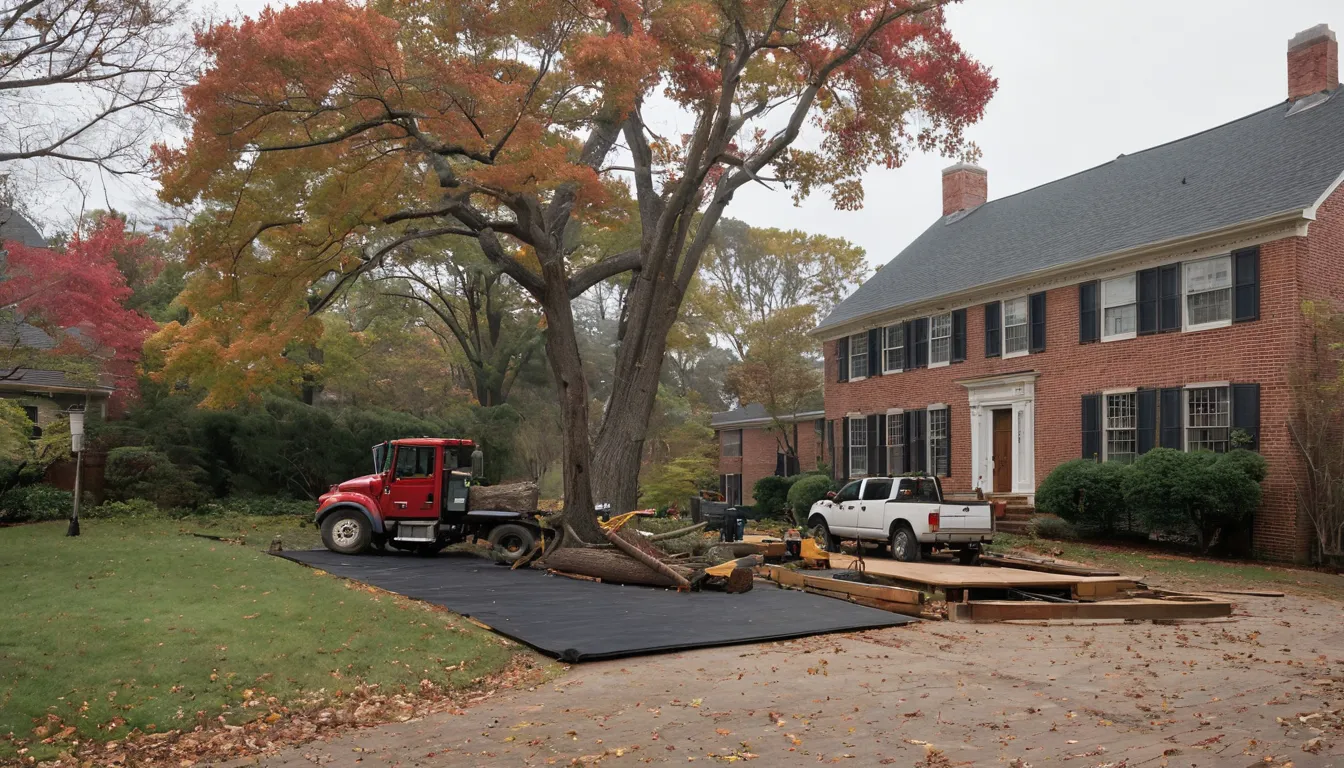
A large tree does not automatically mean a larger bill than a smaller one. A tree beside a fragile porch, behind a narrow gate, or over a patched driveway can take more planning to remove. Sheettip Tree Service helps homeowners in Laytonsville describe those details when seeking residential tree removal. Providers in our network assess the job, explain their approach, and supply their own pricing and appointment options.
The aim is a written quote you can understand before choosing the work. That means checking which tree is included, how branches and wood leave the property, and what condition the yard should be left in. Older homes deserve a closer look at access and past repairs. Mention aging masonry, basement entrances, and buried utilities early so a local provider can consider them when planning the job.
If the tree has changed, start there
A new lean, a split trunk, or a large hanging branch belongs at the start of your request. Keep people and pets away from the affected area. Do not walk underneath to take a closer photo. If the tree touches power lines, stay clear and contact the utility. Describe visible changes from a safe spot when asking about residential tree removal.
Arrange a visit with useful details
Request a callback to discuss residential tree removal in Laytonsville and check provider availability. Explain which tree concerns you, where it stands, and whether you want an appointment for an assessment. Sheettip Tree Service is a referral service. The independent provider evaluates the tree, proposes the work, and confirms scheduling. Availability and appointment arrangements vary by provider.
Removal is a decision, not a size test
A lot of people think a tall tree must come down. Height alone does not settle that question. Homeowners also seek removal for severe decline, trunk damage, crowding, or planned construction. Tell the provider what you want to solve. A tree blocking a building project raises different questions from one dropping damaged limbs near a porch.
A nearby root does not prove damage
Roots near a wall or driveway can raise concerns, especially around older houses. Still, proximity does not establish the cause of a crack. Tell the provider about earlier inspections and repairs. If the concern involves a foundation or buried pipe, the relevant trade may need to assess it. Tree removal should not be presented as a certain fix for an unconfirmed problem.
Price the access before judging the height
Two trees of similar size can need very different removal methods. An open lawn may allow equipment close to the trunk. A narrow passage beside a rowhouse may require smaller loads and more handling. Gates, steps, fences, and neighboring buildings all matter. Send access photos if requested, without entering an unsafe area to get them.
Treat national prices as a starting point
Typical U.S. residential tree removal prices often fall around $300–$2,500 per tree, with difficult jobs reaching $5,000 or more. These are broad planning ranges, not local offers. Trunk size, condition, access, equipment, and disposal affect the total. Ask the provider for a written quote based on your property before deciding whether a price fits your project.
Check the inclusions line by line
A short quote can leave long questions. Ask whether the amount includes cutting, lowering sections, handling branches, hauling wood, and routine cleanup. Confirm whether equipment charges appear separately. If several trees are involved, identify each one clearly in the written scope. A lower total may simply describe less work, so compare the details before comparing the final figures.
Mention past repairs around older homes
A repaired driveway may look solid while hiding weak edges. Older brick steps, patched retaining walls, and basement bulkheads also deserve attention. Point them out before equipment access is agreed. For colonial and split-level homes, changes in ground level can affect the route through the yard. The provider should explain proposed access and any practical limits on surface protection.
Mark what cannot be seen
Tell the provider about known buried services, including older cast-iron or galvanized lines, irrigation, and private wiring. Do not guess their route from where a fixture sits. Ask who arranges any required utility marking before ground disturbance. Share available records for past plumbing work or yard changes. Hidden features need discussion even when the main task happens above ground.
Settle permissions before setting the date
A tree on your property may still be subject to local removal rules. Boundary trees and shared access can add questions. Check with the relevant local office about permits or protected trees, and ask the provider who handles any paperwork. Put that responsibility in writing. If ownership is unclear, resolve it before authorizing removal rather than relying on a fence line.
Understand how the tree comes down
The phrase tree falling service can suggest cutting a trunk and letting the whole tree drop. Residential yards often require another approach. A provider may remove branches and trunk sections in stages, lowering pieces where space is limited. Ask how nearby structures will be considered, where equipment will sit, and which parts of the yard need to remain clear.
Ask questions that reveal the scope
When choosing a provider, ask for proof of applicable coverage and any credentials required for the work. Discuss responsibility for property damage and how changes are approved. Useful answers should relate to your tree and yard. Ask who your contact will be for the appointment, written quote, and any questions after the work is complete.
Leave room for weather decisions
Humid summers can leave lawns soft after rain. Nor'easters and freeze-thaw winters can change access and working conditions. A planned appointment may need adjustment when conditions affect safety or equipment use. Ask the provider how weather changes are communicated. Avoid treating a date as permission to proceed regardless of what the yard or tree looks like that morning.
Make removal day easier to manage
Once the provider confirms the plan, move vehicles, furniture, and portable play equipment out of the agreed work area. Arrange for pets and children to stay clear. Discuss access with neighbors if needed. Do not remove fences or trim branches yourself unless that preparation has been discussed. Confirm which entrance the provider will use and how access will be maintained.
Know what remains when work ends
Tree removal does not necessarily include stump grinding. Confirm the expected stump height, whether logs stay or leave, and what cleanup covers. Raking debris is different from repairing a lawn or planting new grass. Before agreeing to the job, ask how the finished area will be reviewed and how you should raise questions about anything outside the written scope.
What's Included
Tree Condition Discussion
Describe visible damage, growth concerns, and nearby structures so a local provider understands why you are considering removal.
Access Review
Discuss gates, slopes, driveway repairs, and tight spaces that may affect equipment choices and the proposed removal price.
Written Scope Questions
Ask the provider to identify cutting, wood handling, hauling, and cleanup before you agree to the work.
Appointment Request
Share your project details and request an assessment; the independent provider confirms availability and arrangements directly with you.
What Your Removal Quote Reflects
These typical U.S. ranges offer a planning guide, not a local price list. Categories overlap, and costs vary by job. Ask the provider for a written quote covering access, equipment, disposal, and cleanup.
| Removal scenario | Typical U.S. range | Price considerations |
|---|---|---|
| Small tree with open access | $150 – $600 | Limited size and straightforward handling. |
| Medium tree with open access | $400 – $1,200 | Branch spread and trunk size affect work. |
| Large residential tree | $800 – $2,500 | More cutting, handling, and wood volume. |
| Very large residential tree | $1,500 – $4,000 | Equipment needs and condition vary. |
| Removal beside buildings | $1,000 – $3,500 | Controlled lowering may add labor. |
| Complex removal requiring a crane | $2,000 – $5,000+ | Crane access, setup, and lifting requirements. |
How It Works
Describe Your Tree
Explain its location, visible condition, and your reason for removal, including concerns about nearby structures or access.
Request a Local Provider Appointment
Discuss availability with a provider and arrange an assessment suited to your tree removal project.
Read the Quote
Check the identified tree, removal approach, hauling arrangements, exclusions, and payment terms before accepting work.
Confirm the Property Plan
Agree on access, preparation, and expected cleanup with the provider before the scheduled removal work begins.
Why Call Sheettip Tree Service
Clear Roles
Sheettip Tree Service makes referrals; the independent provider assesses your tree, quotes the job, and carries out the work.
Scope First
Understand what a price includes before comparing it with another estimate for the same tree.
Older Properties
Bring attention to repaired surfaces, aging masonry, and narrow access when describing your property to a provider.
Useful Questions
Turn concerns about wood disposal, equipment, and cleanup into details for your written quote.
Other Services
Need residential tree removal in Laytonsville?
Request a callback to discuss your tree removal project and check provider availability. Prefer to write it down? Use the estimate request form.
No obligationResidential Tree Removal FAQ
How much does residential tree removal cost in Laytonsville?
A site assessment is needed for local pricing. Typical U.S. tree removal costs often run $300–$2,500 per tree, with complex jobs costing more. Access, condition, equipment, and hauling affect the amount. Request a written quote showing inclusions and exclusions.
Does tree removal include taking away all the wood?
Not necessarily. Some quotes include hauling branches and trunk sections; others leave wood on site. Ask where retained wood will be placed and whether cutting it into smaller pieces changes the provider's price.
Can a tree be removed from a small yard behind an older house?
Often, but access needs assessment. A provider may use sectional removal or specialized equipment where space is tight. Mention fragile masonry, basement entrances, and patched paving. Ask for an explanation of access arrangements and surface protection before accepting the quote.
Reach a local provider
Request a callback to discuss your tree removal project and check provider availability. Prefer to write it down? Use the estimate request form.
No obligation